PGD/PGS: 23 Chromosome Microarray - Possible Mechanisms of Embryo "Self-Correction"
Published: 12/11/2015
Day 3 embryos, having a mixture of normal and abnormal cells (mosaicism), undergo a previously undescribed normalization process called genomic normalization during differentiation to the blastocyst stage. This normalization may be due to the abnormal cells (aneuploid) undergoing degeneration (apoptosis) — studies are showing that there are genes within the embryo that initiate apoptosis in abnormal cells rather than cell division or mitosis. Abnormal cells divide less than normal cells, thus resulting in their marginalization within the embryos (possibly resulting in fragments seen within the embryo) and /or due to mechanisms within the embryo that are not yet understood.
Initially, Arizona Center for Fertility Studies suggested that all abnormal day 3 embryos detected by PGD/PGS 23-chromosome microarray that reached the blastocyst stage by day 5 or 6 and appeared developmentally normal should undergo trophectoderm (TE) biopsy (at no additional charge) and then cryopreserved. If the TE biopsy came back showing a normal chromosome competent, it can be assumed that the embryo had "self-corrected" or undergone normalization, and could be used for a future frozen embryo transfer (FET).
As a result of our experience over the last several years doing 23-chromosome microarray (and now what seems to be conclusive evidence that embryos can "self-correct"), Arizona Center for Fertility Studies strongly recommends only doing biopsies on day 5-6 embryos (blastocysts) using laser-directed TE (trophectoderm) biopsy. This means that after the blastocyst is biopsied, it will undergo cryopreservation and be transferred in a subsequent frozen embryo transfer (FET) the following cycle. Although this means that the couple will need to wait a cycle to do the transfer, there are several advantages to doing a TE biopsy as opposed to a day 3 biopsy:
- First and foremost, it eliminates dealing with the possibility of "self-correction," which Arizona Center for Fertility Studies has observed happens more commonly than expected. Arizona Center for Fertility Studies was in a unique situation to be able to re-biopsy normal-appearing day 5-6 blastocysts at no charge. Most clinics are not able to do this, and if they are doing day 3 biopsy and the chromosomes come back abnormal, they have to discard the embryos, because without re-biopsy, there is no way to know if they "self-corrected," and it is too risky to assume they did. If a patient feels strongly that she wants to do a day 3 biopsy in order to avoid a FET (see frozen embryo transfer-FET link) and has developmentally normal blastocysts that come back chromosomally abnormal, Arizona Center for Fertility Studies will still do a TE biopsy (at no charge), cryopreserve the embryo(s), and wait for the results of the TE biopsy. If the re-biopsy is normal, she will be able to do a future FET if needed. Although Arizona Center for Fertility Studies strongly recommends day 5-6 TE biopsy for PDG/PGS with subsequent FET, the couple will not have to worry about discarding "normal" embryos.
- Another reason to do day 5-6 laser directed TE biopsy is that evidence suggests that blastocyst stage embryos do better in group culture than they are separated on day 3 (which a day 3 biopsy would do).
- Additionally, day 3 biopsy has an increased chance of failed amplification (see below) because only one cell is being removed. With a TE biopsy, you can safely remove 3-4 cells, which eliminates the risk of failed amplification and gives a more accurate interpretation.
- Also, by doing TE biopsy and cryopreservation with subsequent FET, the patient can be stimulated more aggressively to make more eggs/embryos and be triggered with Lupron (rather than with hCG), completely avoiding the risk of ovarian hyperstimulation syndrome (OHSS).
- Finally, the couple only pays for TE biopsy if the embryos reach the blastocyst stage. If a day 3 biopsy is done, all embryos need to undergo a biopsy, since you do not know which ones will develop into blastocysts. With TE biopsy, if the embryos do not reach the blastocyst stage (which is of course not a good sign), at least you are not paying to have PGD/PGS done.
In Arizona Center for Fertility Studies’ experience, all of these advantages collectively add up to higher success rates when using PGD/PGS, and is the reason Arizona Center for Fertility Studies now strongly recommends only doing TE biopsy, cryopreservation, and subsequent next cycle FET on patients undergoing PGD/PGS. The one exception is in our out of state patients, unless they can make a return trip. Our success rates are still very good with day 3 biopsy, but Arizona Center for Fertility Studies prefers day 5 TE biopsy.

Success Rates
In-Vitro
Fertilization (IVF)


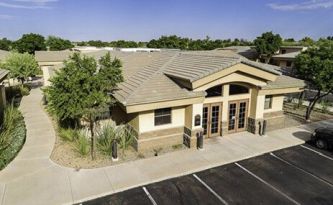
Our Scottsdale Fertility Clinic Location
8426 E Shea Blvd.
Scottsdale, Arizona 85260
Phone: (480) 860-4792
New Patient Referrals Fax: 480-946-9914
Routine Fax: 480-860-6819
Hours:
Monday - Friday: 8:00 AM - 5:00 PM
Saturday – Sunday: Closed
Important Notice:
If you're traveling north via the Loop 101 Pima Freeway towards our clinic, please be aware of significant delays, especially near the Shea Blvd. exit. We recommend allowing extra travel time to ensure you arrive relaxed and on time for your appointment. Your timely arrival helps us provide the best care for you and others. Stay safe and plan ahead!
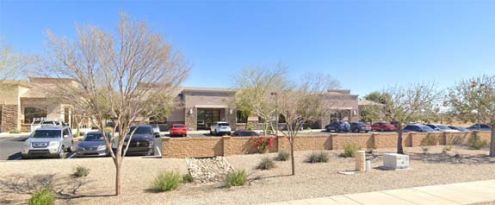
Our Gilbert Fertility Clinic Location
3885 S. Val Vista Dr.
Ste 105
Gilbert, Arizona 85297
Phone: (480) 860-4792
New Patient Referrals Fax: 480-946-9914
Routine Fax: 480-860-6819
Hours:
Monday - Friday: 8:00 AM - 5:00 PM
Saturday – Sunday: Closed